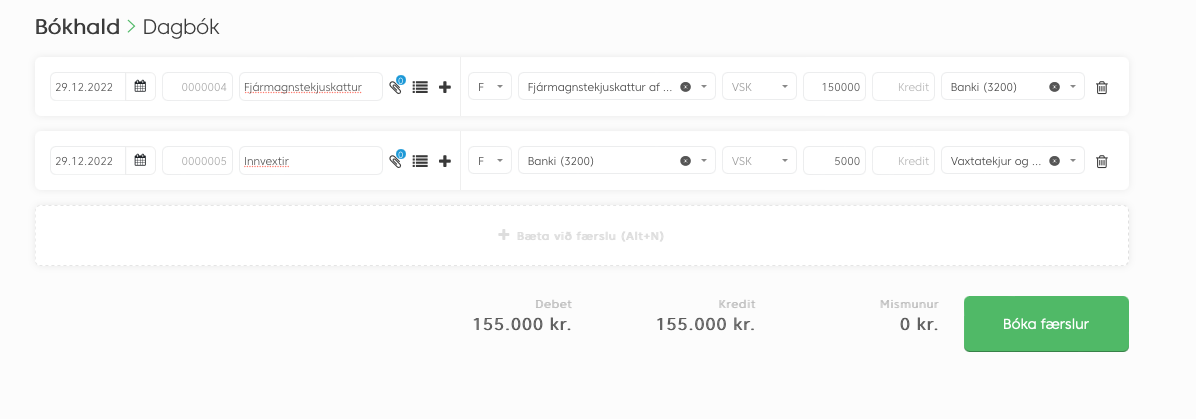
Common accounting entries in the journal
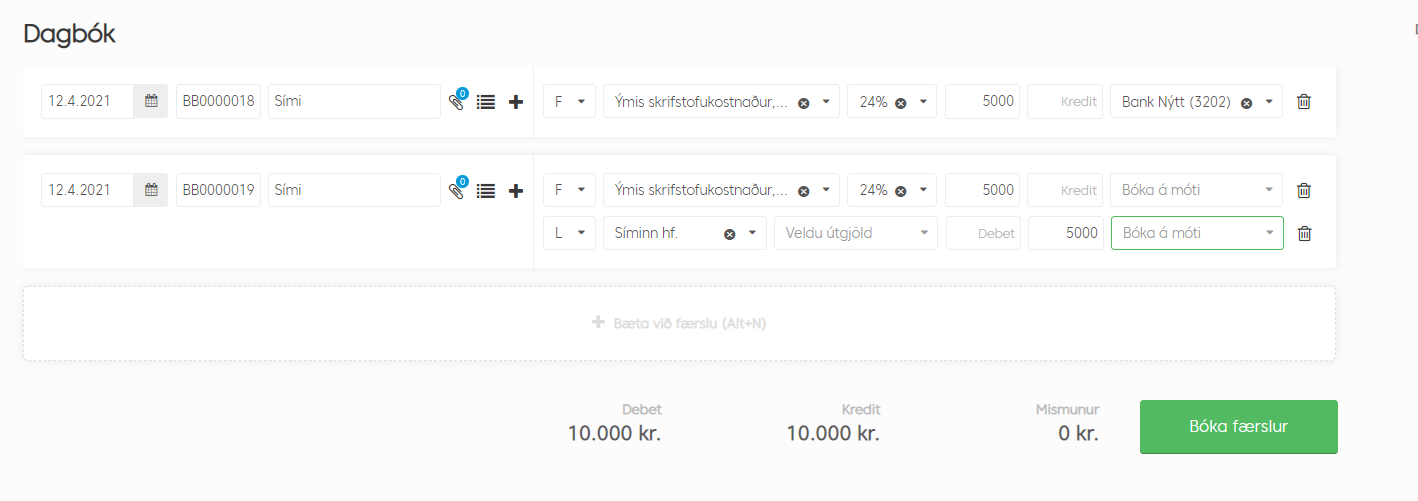
When recording expenses, an expense account must be selected. The balancing account then depends on whether the expenses were paid in cash or recorded as a liability to a supplier. Below are examples of both:
Recording revenue #
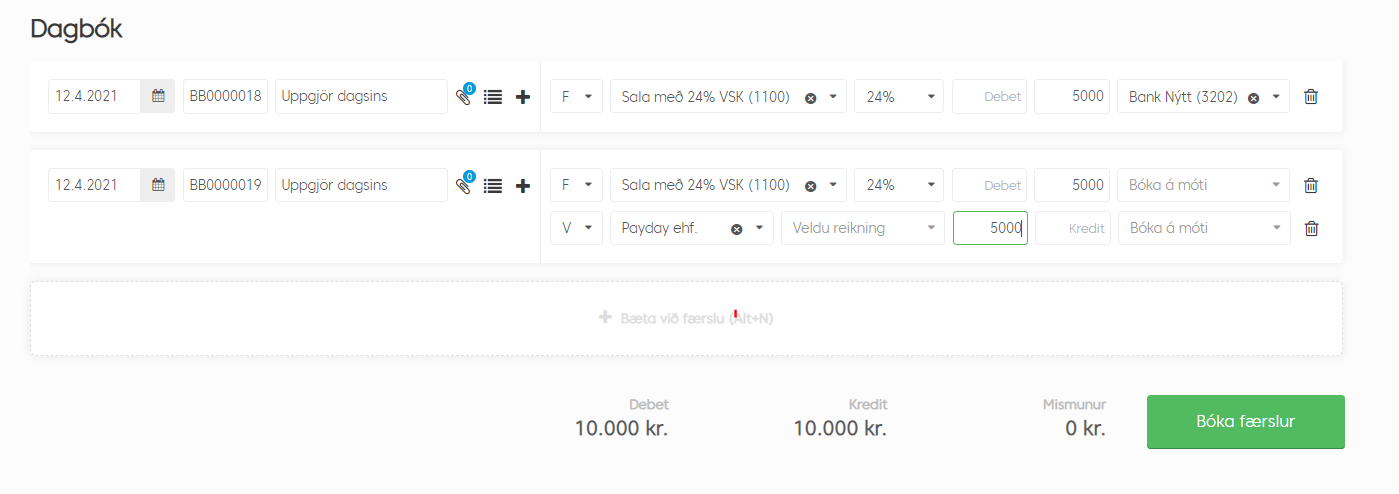
The same applies here, a revenue account is selected. The balancing account then depends on whether the revenue was paid in cash or recorded against a customer. Below are examples of both:
Payment received from a customer #
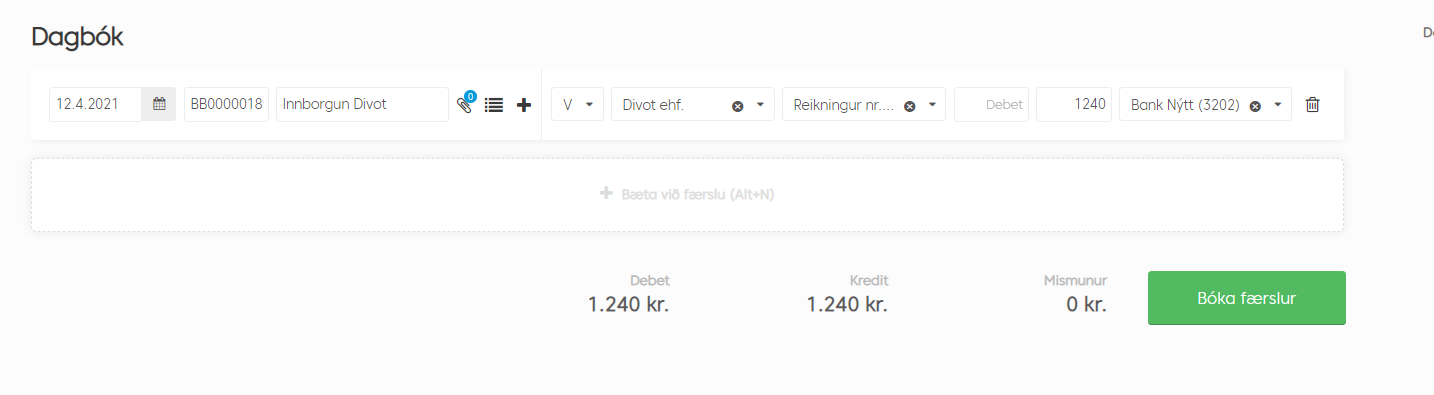
When recording a payment from a customer, you must select which invoice is being paid.
Payment of an invoice from a supplier#
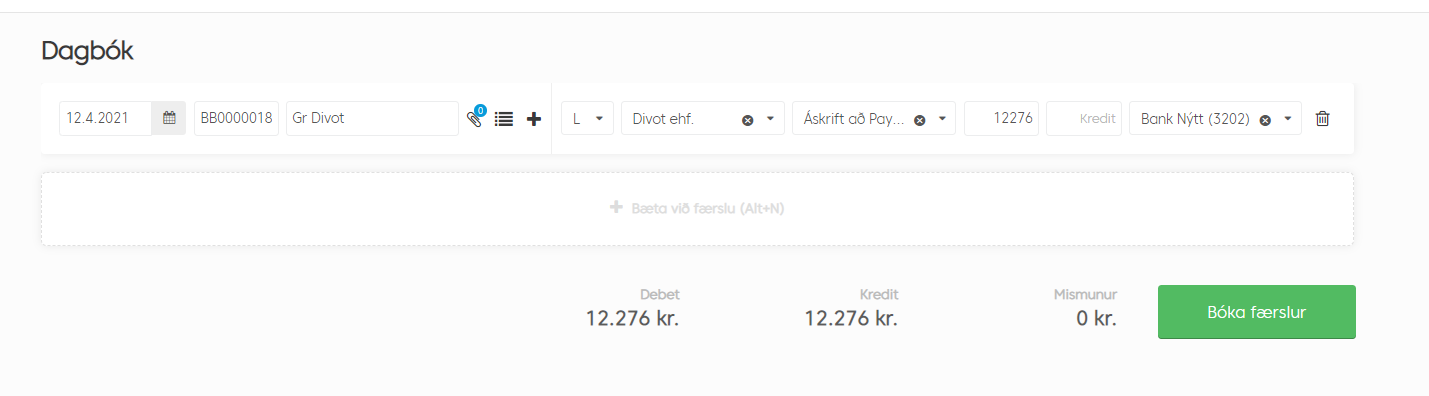
In the same way, you must select which invoice is being paid when recording a payment to a supplier.
Out-of-pocket expenses by owner/loan from owner#
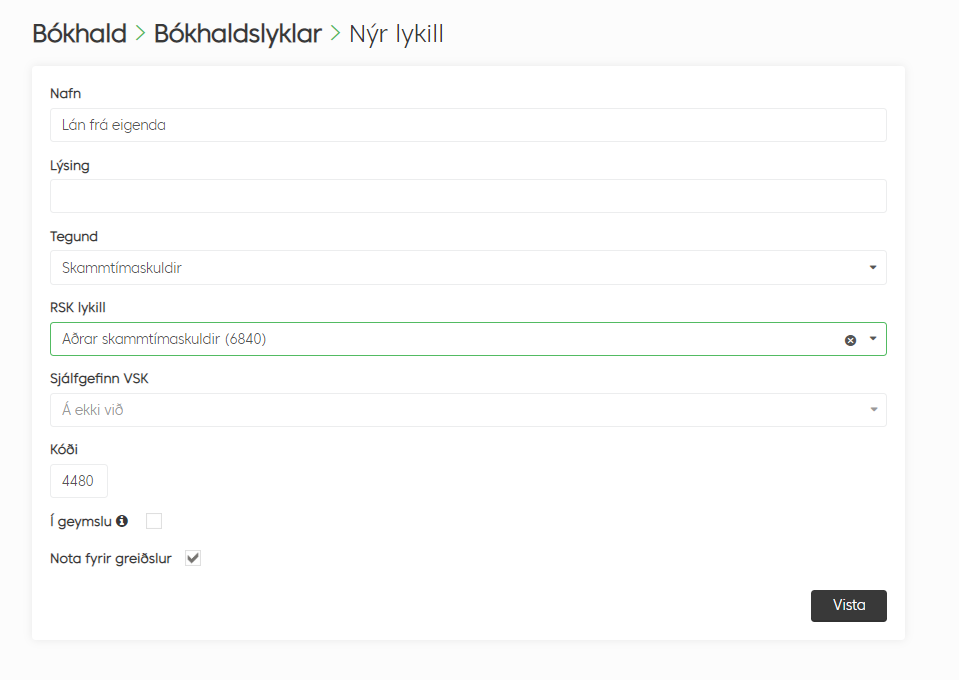
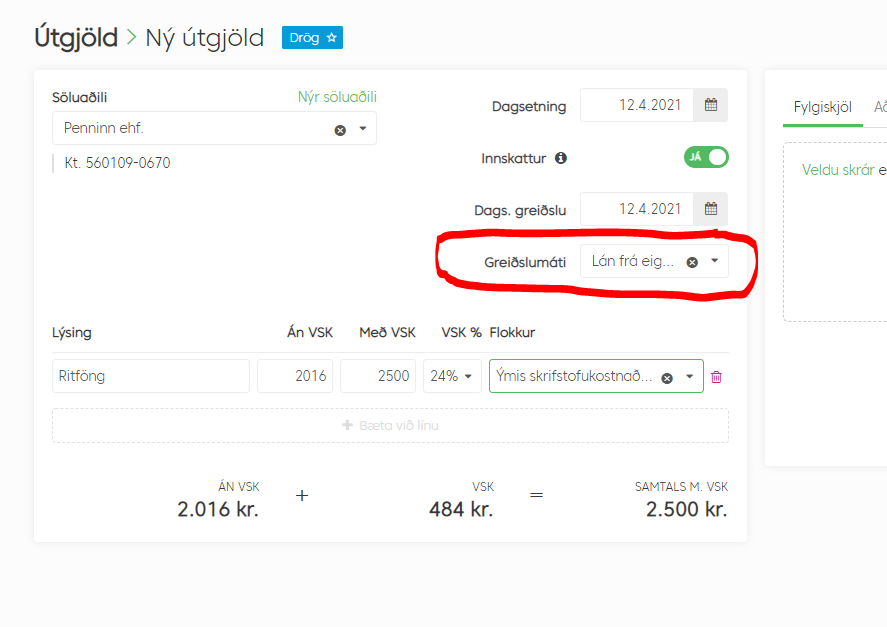
When recording expenses paid out-of-pocket by the owner, it is useful to track them in a specific ledger account. You need to create the account and check "Use for payments". This creates a payment method.
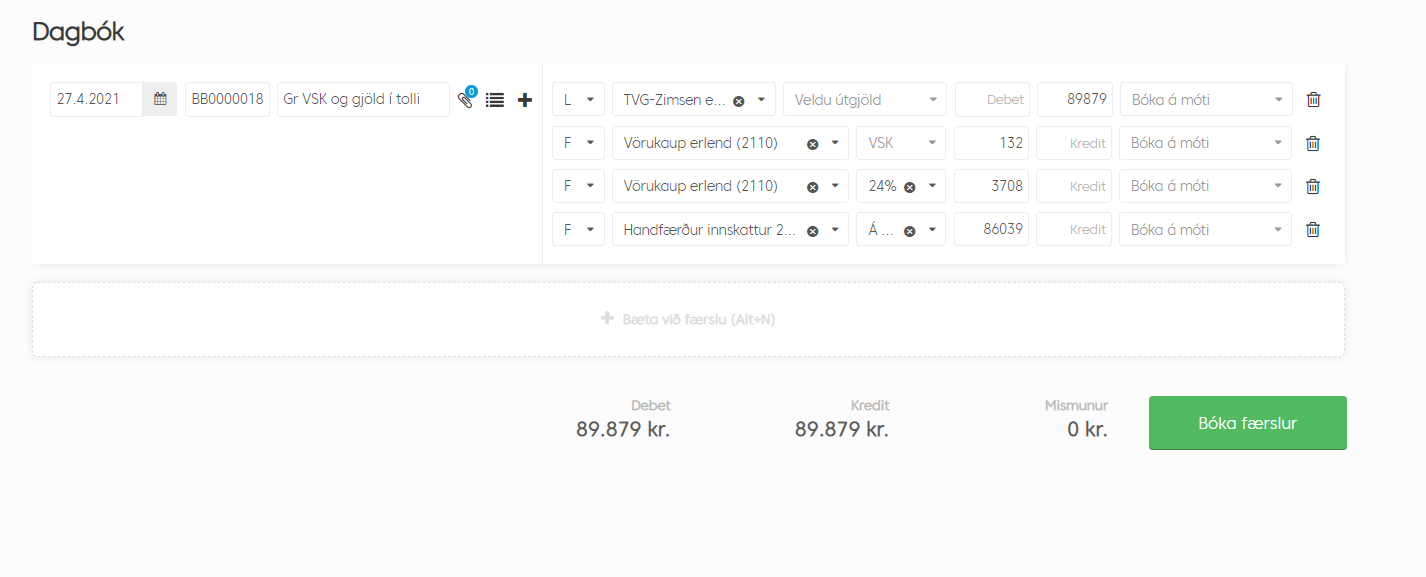
Record VAT and customs duty on imports#
Below is an example of an entry for expenses incurred during import.
Record capital gains tax and credit interest
Capital gains tax:
When recording capital gains tax, debit capital gains tax on interest (account 3920) and select the bank account as the balancing account
Credit interest:
When credit interest is recorded, debit the bank account and select Interest income and other financial income (account 1390) as the balancing account